
How Avoidance Shaped American Philanthropy
On the interplay between federal law and institutional philanthropy


The end of the year has a way of forcing big decisions into a short, arbitrary window. Budgets close. Calendars reset. Choices that shape long-term outcomes get compressed into a few hurried weeks.
For philanthropists, the end of 2025 may feel familiar, but it marks a major change in how philanthropy has worked in the United States.
To understand why this moment is different, it helps to look not only at the mechanics of the charitable tax deduction, but also at what it has long been used to avoid.
Below I share some thoughts—and a few practical steps—in this edition of Modern Funder, which I write to help modernize investments in better outcomes.
Season's Greetings from my desk in Maine,
—Patrick Diamond
When private wealth grows faster than public investment, governments face a choice.
They can tax and build systems to ensure health, security, and basic welfare. Or government can leave those responsibilities partially unmet, relying instead on voluntary donations to fill the gap.
In the United States, government has consistently chosen the second path.
A shortcut to public welfare
At the beginning of the twentieth century, public welfare systems were thin. The federal government played a limited role in ensuring social welfare and economic security. As wealth accumulated and the cost of everyday life rose, communities organized around charity and mutual aid to sustain hospitals, schools, and civic institutions. This arrangement, while fragile and insufficient, persisted until war forced the issue.
When the demands of World War I required massive public funding, the government raised taxes, particularly on the wealthy. Yet it stopped short of building the kind of social infrastructure that might have reduced dependence on private charity altogether.
Instead, it reached for a shortcut: the charitable tax deduction.

The tax break allowed the state to raise revenue without fully taking responsibility for adequately financing the common good. It preserved private philanthropy as a substitute for direct investment in social welfare. In effect, it was less an act of confidence in philanthropy than an act of hesitation—a way to prevent suffering without fully committing to the systems that would create more equal prosperity.
That compromise endured. Over time, it hardened into an operating principle. Rather than relying primarily on broad taxation and universal provision, the United States chose to subsidize private giving through the tax code.
In practice, this gave wealthy individuals and institutions disproportionate influence over how social needs were addressed. Philanthropy became an enduring layer of support for public-serving institutions—but never a complete or reliable substitute for social policy.
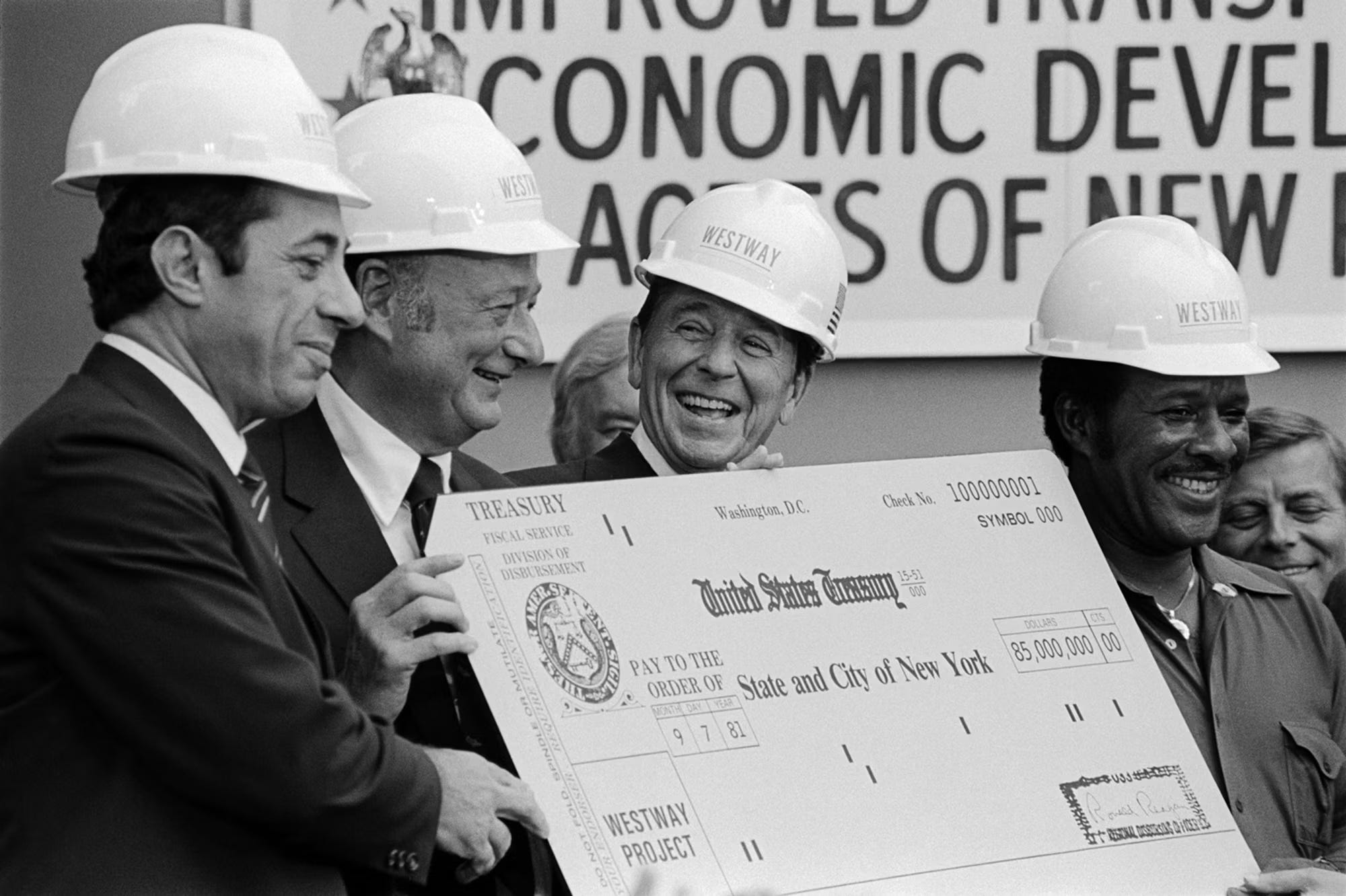
The structure held, even as government expanded during the New Deal and Great Society eras. Philanthropy was not displaced; it remained alongside the state. And when public investment receded again in the 1980s, the system reverted to form. Once more, private giving was treated as a shortcut for social investment, with the tax code making that trade-off workable.
Everything changes in 2026
That context matters now because the tax system is shifting in an unfamiliar way.
Beginning in 2026, the charitable tax deduction will be scaled back. Under new federal tax law, the value of deductions for high-income funders will be smaller and harder to realize than it has been in recent decades.
For many wealthy philanthropists who itemize their taxes, charitable gifts currently reduce taxable income at the highest marginal rate. Starting next year, that benefit shrinks. A portion of annual giving will no longer generate any deduction at all, and the tax value of the rest will be significantly capped.
The charitable tax deduction remains, but it does less work.
Taken together, these changes weaken one of the core supports of the American philanthropic system.
The tax code will no longer subsidize large-scale private giving in the same way, even as reliance on philanthropy continues.
This is where the old bargain begins to break down. For over a century, when government stepped back from funding the common good directly, it used the tax code to make private investment easier. The substitution effect remains, but the subsidy does not.
That imbalance—less public investment and weaker incentives for private giving—is what makes this moment different.
Tips for Savvy Philanthropists
For modern funders, this moment calls for clarity of purpose and a more deliberate approach to investing philanthropic capital.
As public investment falls short of need, private philanthropy is being asked to play a more consequential role.
Purpose matters more than ever, because decisions about where social investments flow carry greater weight.
At the same time, the environment has become less forgiving. Weaker tax incentives and tighter rules leave less room for passive or last-minute donations. Achieving meaningful outcomes increasingly depends on active decision-making and thoughtful timing.
Modern philanthropy should be practiced like investment: purposeful, strategic, and focused on outcomes rather than gestures.
Understanding how the historical bargain between government and philanthropy took shape—and why it is now fraying—provides the context needed to act intelligently in the present.
What follows is not a solution to the deeper failures of social policy. It is something narrower and more practical: how modern funders can act with clarity and flexibility in a system that no longer props up generosity the way it once did.
1) Act now while the bargain still exists.
For many funders, the most practical move is to make donations now rather than wait.
You can donate directly to the causes you care about before December 31 and receive the full charitable deduction under current rules.
Or you can contribute to a donor-advised fund, which works a lot like a brokerage account for social investment.
You put money in now, receive the tax deduction in 2025, and then decide over time where to allocate those funds—making grants as your priorities, partners, and opportunities take shape.
That’s the approach I’m taking this year: funding my donor-advised fund and investing those resources thoughtfully over time.
2) Plan ahead as flexibility fades.
In the years ahead, the tax code will be less accommodating of informal or reactive giving. Weaker incentives and tighter rules mean that philanthropy aimed at real-world outcomes will require clearer strategy and more intentional planning.
For funders focused on social outcomes rather than financial return, giving increasingly demands the same level of forethought as any other investment.
3) Let purpose, not the tax code, be your guide.
Over the long term, effective philanthropy is anchored in purpose and clear outcomes, not tax efficiency.
Incentives will continue to change, but the need to support meaningful progress will not. Funders who stay focused on what they are trying to make possible—the difference they want to make—will continue to act with clarity even as the bargain shifts.
I spend my time helping funders navigate these shifts in modern giving, and I’m always happy to compare notes. If there are topics, questions, or pieces you’ve read that should inform a future edition of The Difference, I’d love to hear about them. —Patrick